
Can Bathroom Blinds Really Keep You Private Without Blocking Fresh Air?
Here’s the thing: your bathroom needs to breathe. But you also don’t fancy giving your neighbours a free show every time you step out of the shower. Sound familiar?
Most people think they have to choose between privacy and ventilation. Either you crack the window and worry about prying eyes, or you keep it shut and deal with condensation dripping down the walls. Neither option feels quite right, does it?
The good news? You don’t have to compromise. With the right blinds and a bit of clever planning, you can create a bathroom that’s both private and properly ventilated. We’ll walk you through exactly how to make it happen — from choosing moisture-resistant materials to positioning your blinds for maximum airflow.
Why Bathroom Ventilation Matters More Than You Think
Let’s talk about what happens when bathrooms can’t breathe properly.
That steamy mirror after your shower isn’t just annoying. It’s a warning sign. When warm, moist air can’t escape, it settles on cold surfaces — walls, windows, ceiling corners. Within weeks, you’ll spot the telltale black spots of mould creeping across grout lines and window frames.
Mould isn’t just unsightly. It triggers asthma, causes respiratory problems, and can seriously affect anyone with allergies. The NHS estimates that damp and mould contribute to health issues affecting millions of UK households each year.
But here’s what matters: proper ventilation stops this cycle before it starts. Fresh air circulation removes moisture, prevents condensation, and keeps your bathroom genuinely healthy. Opening a window or running an extractor fan for 15-20 minutes after bathing makes an enormous difference.
The challenge? Doing this whilst maintaining privacy. That’s where the right blinds become essential.
Choosing Blinds That Handle Bathroom Humidity
Not all blinds belong in bathrooms. The exception is blinds specifically designed to resist moisture.
Standard fabric blinds absorb steam and moisture like sponges. They’ll warp, develop water stains, or start growing mould within months. Wooden blinds might seem sturdy, but natural wood swells and shrinks with humidity changes, eventually splitting or warping beyond repair.
Want to know the secret? Look for materials engineered for wet environments.
Faux wood blinds top the list. They’re made from composite materials or PVC that completely resist moisture. You get the elegant look of real wood without any humidity worries. Wipe them down occasionally, and they’ll look pristine for years.
PVC roller blinds work brilliantly too. They’re waterproof, wipeable, and available in countless colours and patterns. Some even feature special coatings that resist mildew growth.
Aluminium venetian blinds offer another excellent option. Metal doesn’t absorb moisture, the slats clean easily, and they’re practically indestructible. Plus, you can angle the slats to control both light and airflow precisely.
Here’s a comparison of your main options:
| Blind Type | Moisture Resistance | Privacy Control | Ventilation Flexibility | Maintenance |
| Faux Wood Venetian | Excellent | Adjustable slats allow partial views | Tilt slats whilst window stays open | Occasional dusting |
| PVC Roller | Excellent | Full coverage when down | Must raise blind to open window | Simple wipe-down |
| Aluminium Venetian | Excellent | Adjustable slats allow partial views | Tilt slats whilst window stays open | Occasional dusting |
| Waterproof Vertical | Very Good | Adjustable louvres | Rotate louvres with window open | Wipe individual slats |
Positioning Your Blinds for Privacy and Airflow
The blind you choose matters. But where you position it matters just as much.
Most people mount blinds in the standard position — inside the window recess, covering the entire opening. This works fine for living rooms. For bathrooms? It creates a problem. When you open the window for ventilation, you must raise the blind completely, sacrificing all privacy.
Look, there’s a better way.
Consider mounting your blind to cover only the lower two-thirds of your window. Install a frosted window film or use obscure glass on the top section. This arrangement lets you crack the top window open for constant airflow whilst keeping the covered lower section completely private.
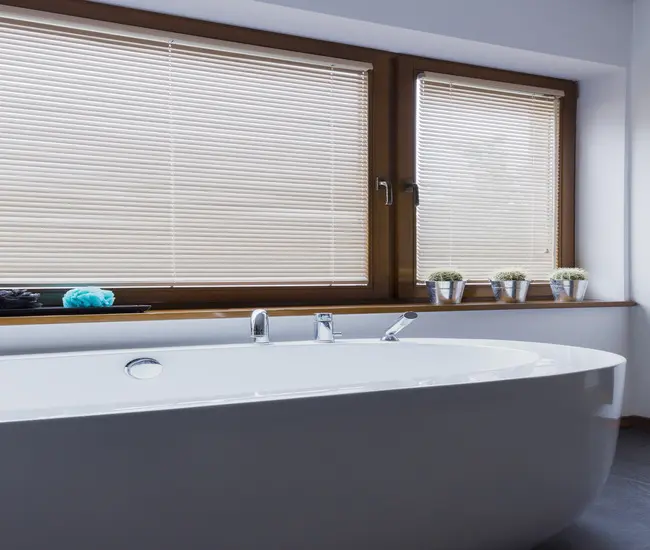
Alternatively, choose venetian-style blinds (aluminium or faux wood) that let you tilt the slats. Close them for privacy, but angle them upward or downward. Air flows freely between the slats whilst the offset angles prevent anyone seeing through from outside. It’s frustrating when you can’t find simple solutions like this, isn’t it?
Top-opening windows work particularly well with this approach. Open the top section, keep your blinds closed below, and enjoy perfect ventilation with complete privacy.
Combining Window Treatments for Maximum Control
Here’s what the professionals know: sometimes one window treatment isn’t enough.
Layering different solutions gives you complete control over privacy, light, and airflow. Think of it like adjustable armour for your bathroom window.
Start with frosted window film on the glass itself. This provides permanent daytime privacy without blocking natural light. You’ll never worry about forgetting to close the blinds before showering.
Add a roller blind with pelmet over the top. Choose a moisture-resistant fabric in a light-filtering or dim-out option. Pull it down for extra privacy during evening hours when indoor lights make you more visible from outside. During the day, raise it completely and rely on your frosted film.
This two-layer approach means you can leave windows open round the clock for continuous ventilation. The frosted film handles privacy. The blind adds flexibility for light control and nighttime coverage.
Another clever combination? Shutters with adjustable louvres on the lower window section, paired with a transom window above. The shutters provide robust privacy and excellent airflow control through the louvres. The upper transom stays clear for additional light and ventilation.
No-Drill Solutions for Rental Bathrooms
Renting your home? You might feel stuck with whatever window treatments your landlord provided.
You’re not, though. Several brilliant blind systems install without drilling holes or damaging frames.
Newblinds.co.uk Limited offers an extensive range of no-drill options specifically designed for renters and anyone wanting damage-free installation. These systems attach directly to your window frames or glass using clips, brackets, or adhesive — no screws required.
Tension-fit blinds use spring-loaded mechanisms that wedge securely inside your window recess. They’re stable, adjustable, and leave absolutely no marks when removed. Perfect for pleated or cellular blind styles.
Magnetic blinds utilise strong magnets that grip metal window frames. Installation takes minutes. Removal is instant. Your deposit stays safe.
Stick-fit cellular blinds attach directly to the window glass using robust adhesive strips. They create a sleek, integrated look whilst preserving your uPVC frames completely. When you move out, they peel away cleanly without residue.
These solutions work brilliantly in bathrooms because they’re available in moisture-resistant materials. You get proper humidity protection without risking your deposit.
Maintaining Your Bathroom Blinds for Longevity
Even moisture-resistant blinds need occasional care. It’s not complicated, but consistency matters.
Wipe down your blinds monthly using a damp microfibre cloth. This removes soap residue, hairspray overspray, and moisture deposits before they build up. For faux wood or PVC blinds, add a drop of washing-up liquid to tackle stubborn marks.
Don’t use harsh chemicals or abrasive scrubbers. They’ll damage protective coatings that make your blinds moisture-resistant in the first place.
Venetian blinds benefit from a gentle vacuum using your brush attachment. Work along each slat to remove dust without bending them.
Check your blind mechanisms every few months. Operate them fully up and down several times. This redistributes lubricant in the internal components and prevents them from seizing from disuse.
The exception is if you spot mould developing despite moisture-resistant materials. This signals a ventilation problem, not a blind problem. Increase your extractor fan usage and window-opening frequency. Address the root cause rather than just cleaning symptoms.
Smart Ventilation Strategies That Work With Blinds
Creating good airflow isn’t just about opening windows randomly. Strategic ventilation makes a massive difference.
Run your extractor fan during every bath or shower, then leave it running for 15-20 minutes afterward. This removes the bulk of moisture before it condenses on surfaces.
Open your bathroom window slightly even when you’re not using the room — particularly overnight. Constant gentle airflow prevents humidity building up between uses.
Create cross-ventilation when possible. If your bathroom door has an undercut gap (most do), opening a window creates airflow from other rooms through the bathroom and out. This gentle current prevents stagnant, humid air from lingering.
Position your blinds to support this strategy. If your venetian slats angle upward, warm moist air rises naturally and escapes through the gaps. Combine this with a cracked window, and you’ve created passive ventilation that works 24/7 without conscious effort.
During winter, balance ventilation with heat retention. Close windows after your initial post-shower airing, but keep extractor fans running longer. Your heating bills will thank you whilst still maintaining adequate moisture control.
Understanding Different Bathroom Window Types
Your window type dramatically affects which blinds work best for balancing privacy and ventilation.
Casement windows (side-opening) swing outward, creating no internal obstruction. Any blind type works beautifully because they operate independently of the window mechanism. Mount blinds inside the recess, tilt venetian slats for privacy, and open windows fully for maximum airflow.
Top-opening windows (top-hung) are brilliant for bathroom ventilation. They create an opening at the top whilst the glass slopes outward. Perfect for combining with lower-mounted blinds. The top gap ventilates. The bottom blind provides privacy.
Sliding sash windows move up and down in vertical tracks. Open the top section down for ventilation whilst keeping the bottom closed and covered by blinds. This configuration gives excellent privacy with superb airflow.
Tilt-and-turn windows offer maximum flexibility. Tilt them inward at the top for gentle ventilation with full blind coverage below. Turn them fully inward for cleaning or maximum airflow when privacy isn’t needed.
Fixed windows don’t open at all. They rely entirely on nearby opening windows or mechanical ventilation. Use moisture-resistant blinds that won’t suffer from trapped humidity between blind and glass.
Getting Professional Advice for Tricky Situations
Some bathroom window situations feel impossible to solve alone. That’s completely normal.
Awkwardly shaped windows, severely sloped ceilings, or windows positioned too close to shower enclosures all create challenges. The good news? Newblinds.co.uk Limited, as the UK’s longest-standing online blinds retailer since 1999, has seen virtually every bathroom window configuration imaginable.
Their expert team understands both the technical aspects of blind fitting and the practical realities of bathroom humidity and ventilation. They work with trusted UK fabricators who can create bespoke solutions for even the most challenging spaces.
Need blinds for a roof window above your shower? They’ll recommend solar-powered options that operate remotely, keeping mechanisms away from moisture. Worried about condensation between blinds and glass? They’ll suggest the right mounting positions and materials to prevent it.
This expertise comes from over 46 years of family experience in the blinds industry, covering everything from manufacturing to installation. When you contact them for advice, you’re tapping into decades of real-world problem-solving, not just product descriptions.
Frequently Asked Questions
Can I use blackout blinds in a bathroom?
Yes, but choose moisture-resistant materials. PVC-backed blackout roller blinds work excellently in bathrooms, providing complete light blocking whilst resisting humidity. However, remember that blackout blinds don’t allow airflow when closed, so you’ll need to raise them periodically for ventilation or rely on extractor fans.
How do I stop condensation forming between blinds and windows?
Mount blinds with a small gap between the fabric or slats and the glass. This allows air circulation that prevents condensation buildup. Using extractor fans regularly also reduces overall humidity levels, minimising condensation risk regardless of blind position.
Are wooden blinds ever suitable for bathrooms?
Natural wood blinds aren’t recommended for bathrooms with showers or baths due to humidity damage. The exception is powder rooms or cloakrooms with toilets only, where humidity stays minimal. Even then, faux wood blinds offer better longevity and require less maintenance whilst looking virtually identical.
What’s the best blind for a small bathroom window?
Venetian blinds (aluminium or faux wood) work brilliantly for small bathroom windows. The adjustable slats let you control privacy, light, and ventilation independently. They don’t take up room when open like roller blinds do, which matters in compact spaces.
The Perfect Balance Is Easier Than You Think
Getting both privacy and ventilation in your bathroom doesn’t require compromising or complex solutions.
Choose moisture-resistant blind materials. Position them thoughtfully to work with your window type. Create consistent ventilation habits using windows and extractor fans together. That’s genuinely all it takes.
The blinds you select will last for years, working quietly in the background whilst protecting your privacy and helping your bathroom stay fresh and mould-free. Worth spending a bit of time getting the choice right, isn’t it?
Start by measuring your windows and considering which blind styles suit your bathroom layout. Then browse the extensive range at Newblinds.co.uk to find exactly what you need. Their family business has been helping UK homeowners solve bathroom window challenges since 1999, combining expert knowledge with quality products from trusted British manufacturers.
Your bathroom deserves to be both private and healthy. Now you know exactly how to make that happen.
Also Read–168 Baseball Puns That Will Hit a Home Run