

How to Balance Short & Long-Term Goals in Product Management?

In product management, balancing short-term tasks with long-term vision is a constant challenge. Why? Short-term goals drive immediate results, but on the other hand, long-term goals ensure sustainable growth and innovation. Maintaining the right balance is important to keeping stakeholders happy and the product development progress happening as planned.
As per ProductPlan, a famous Product Roadmap Software survey found that 68% of product teams struggle with prioritising immediate requests over strategic initiatives. This mostly leads to roadmap delays and reduced innovation. Effective balance is not just beneficial, it’s essential for long-term success. In this article, we are going to explore in detail how to balance short and long-term goals effectively.
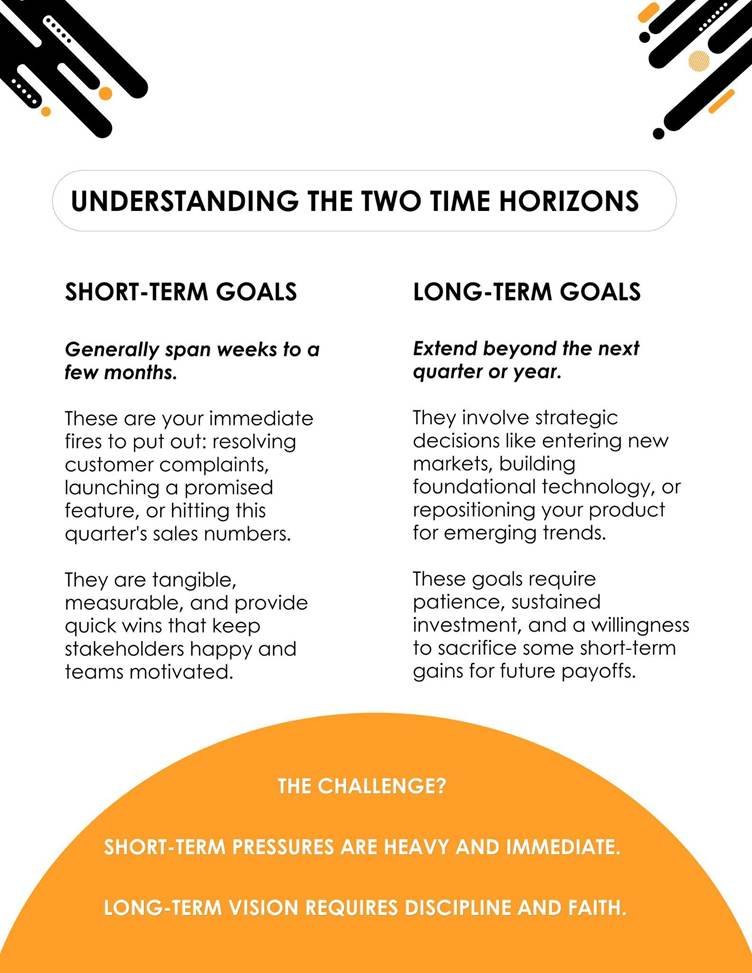
Understanding the Two Time Horizons
Focus on Your Vision
Your product vision is your direction star. Before taking on any short-term task, ask:
| Does this move us closer to our long-term goals? |
If not, it might be a distraction. Great product managers use the vision to guide decisions, ensuring daily work aligns with the bigger picture.
Use the 70-20-10 Rule
A helpful framework many product teams use is:
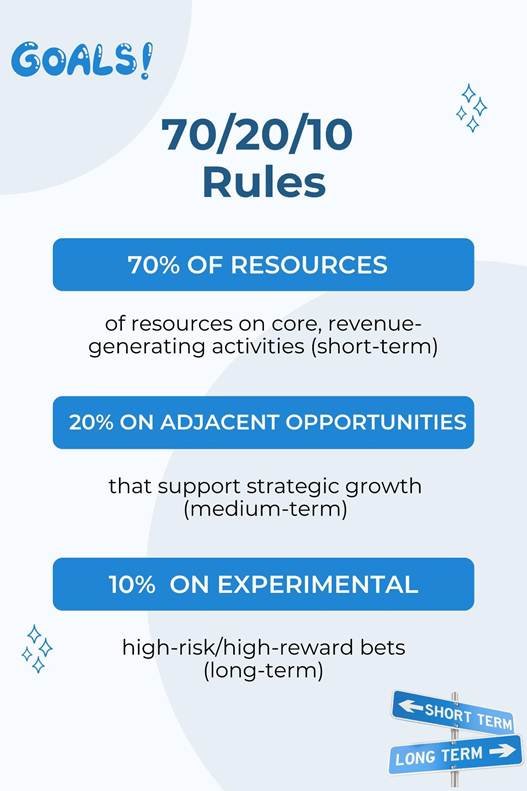
This allocation ensures you are not neglecting immediate needs while still investing in innovation and future capabilities.
Assess Your Reality
Not all requests are equal. Use data to separate emotional demands from real needs.
- How many customers will benefit?
- What’s the cost of delay?
By quantifying impact, you can make objective decisions and avoid derailing long-term plans for one-off fixes.
Set Clear, Measurable Goals for Both
Short-term goals are naturally easier to measure: reduce churn by 5% this quarter, launch Feature X by month-end. But long-term goals need metrics too.
| Instead of vague aspirations like: “become market leader,” Define measurable milestones: “Increase market share from 12% to 18% over three years” or “Build AI capabilities that reduce customer onboarding time by 40% within two years.” |
Tracking both types of metrics keeps teams accountable and ensures neither horizon gets ignored.
Track Your Progress
Keep your product backlog organized. Tag tasks as short-term, mid-term, or long-term. This helps you visualize whether you’re investing enough in the future. A healthy mix ensures your team delivers quick wins without sacrificing strategic progress.
Be Practical and Decisive
You won’t always have perfect information. Avoid analysis paralysis, make informed decisions with the data you have. Sometimes, you’ll need to say “yes” to short-term needs, but do so with clarity and communicate the trade-offs clearly.
Follow a Structured Process
Adopt a simple framework to maintain balance:
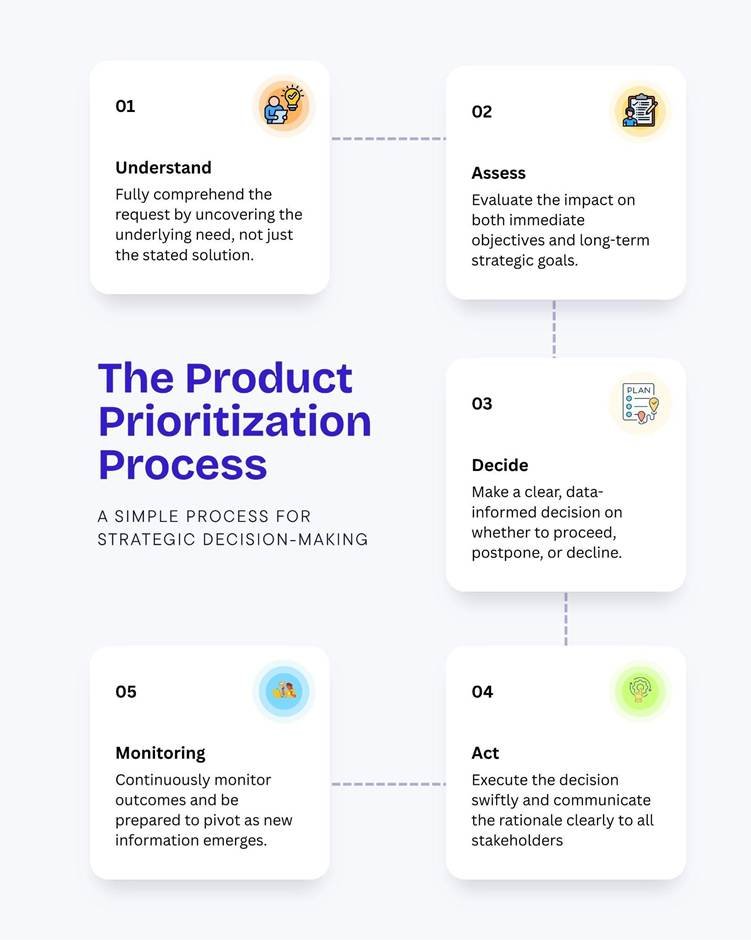
This approach keeps your team agile and focused.
Communicate Openly
Transparency builds trust. Share your prioritization process with stakeholders so they understand why some things are done now and others later. When everyone sees the balance, it’s easier to align on what matters most.
Learn and Adapt
Product management is iterative. Regularly review your priorities and be prepared to adjust them as needed. What seemed urgent last month may not be today. Stay flexible, and keep your eyes on both the horizon and the path ahead.
So, while coming to say about learning, you need to develop your knowledge on everything about CSPO Certification, which enables product managers with the core frameworks to balance short and long-term goals. How? It teaches prioritization techniques like Weighted Shortest Job First (WSJF) and story mapping, enabling data-driven decisions that deliver immediate customer value while strategically building towards the long-term product vision.
Conclusion
Balancing short and long-term goals in product management isn’t about choosing one over the other; it’s about integrating both into a coherent strategy. Short-term goals fund your existence and build credibility; long-term goals ensure you’re not just surviving but thriving and leading.
Use frameworks like the 70-20-10 model, anchor decisions to your vision, and communicate trade-offs transparently. Review regularly and stay flexible. The best product managers don’t see short and long-term goals as competing forces but as complementary elements of sustainable success. Master this balance, and you will build products that deliver value today while shaping the future.
Read more: What Data Alone Won’t Tell You About Your Customers
How Important Is Versatility For Cricket Players?
How A Spa-Style Dental Clinic Transforms Your Smile And Comfort